

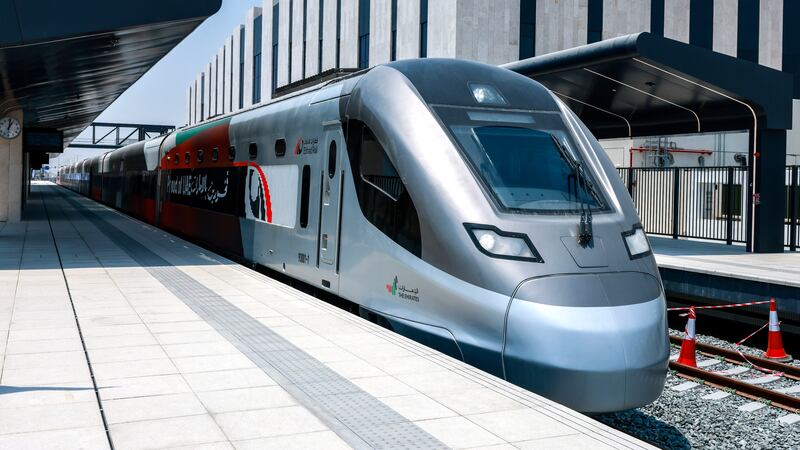
The UAE has entered a new chapter in passenger mobility with the launch of Etihad Rail’s national passenger rail network. From 30 September 2026, passengers can travel directly between Abu Dhabi and Dubai by train, with the journey taking approximately one hour and four minutes.
The new service connects the UAE’s two largest economic centres while also linking Dubai with Fujairah, creating a wider passenger network designed to support movement between cities, communities and key destinations.
A new connection between Abu Dhabi and Dubai
The Abu Dhabi-Dubai passenger service will operate 10 daily journeys, providing passengers with multiple travel options throughout the day. The Dubai service operates from Etihad Rail’s Al Yalayis Station in Jumeirah Golf Estates, creating a new rail connection between the two emirates.
The launch follows the inauguration of Etihad Rail’s Dubai Station on 28 September, when the UAE’s national passenger rail network was officially unveiled. The opening marks the latest stage in the development of a nationwide rail system that is designed to expand connectivity across the Emirates.
Etihad Rail’s passenger network is being introduced in stages. Dubai and Al Dhaid stations opened on 30 September 2026, with further expansion planned to Zayed City and Liwa in November, Al Dhafra in December and Sharjah in March 2027.
Designed around the passenger experience
The introduction of passenger rail is not simply about moving people from one city to another. Etihad Rail has positioned the service as an integrated mobility experience, with stations, onboard services and connections to other modes of transport designed to make rail a practical option for everyday journeys.
Passengers travelling on the network will have access to guaranteed seating, comfortable legroom, Wi-Fi and power at every seat. Stations have also been designed around clear wayfinding, accessible facilities and dedicated passenger support.
Fares start from AED39 for Comfort Class and AED109 for Premium Class, with tickets available through the Etihad Rail mobile application, website and ticket vending machines at stations.
The Dubai station is also connected to Jumeirah Golf Estates Metro Station by a dedicated pedestrian bridge. Integration with Dubai’s Nol system enables passengers to combine Etihad Rail journeys with Dubai Metro, Tram and bus services using a single QR code, strengthening the connection between intercity and urban transport.
Building a connected national network
Passenger services are operated by Etihad Rail Mobility, a joint venture between Etihad Rail and Keolis. The operating partnership combines Etihad Rail’s national railway capabilities with Keolis’ international passenger transport expertise.
The wider passenger network is being developed as part of the UAE’s National Railway Programme, with the objective of connecting population centres, economic hubs and tourism destinations across the country.
As additional stations come online, the network will provide greater access to rail for communities beyond Abu Dhabi and Dubai. This phased approach will progressively extend passenger rail’s reach across the Emirates and integrate it more closely with existing public transport networks.
The new step: high-speed rail
The launch of the national passenger service also comes as the UAE advances plans for a dedicated high-speed rail link between Abu Dhabi and Dubai.
Announced in January 2025, the high-speed project is being developed as a separate fully electrified network. The planned service will connect the two cities in approximately 30 minutes, with trains capable of reaching speeds of up to 350 km/h.
The high-speed railway is intended to complement the national passenger network rather than replace it, creating different layers of connectivity across the UAE. While the national passenger service will connect cities and regional communities, the high-speed service is designed to provide rapid connectivity between the country’s two largest economic centres.
Together, these developments signal a broader shift in the UAE’s approach to mobility, with rail increasingly becoming part of the country’s integrated transport infrastructure.
A new era for mobility in the UAE
The launch of Abu Dhabi-Dubai passenger services represents more than the introduction of a new way to travel. It is a major step in the development of a connected national railway network and the integration of rail with existing urban transport systems.
As Etihad Rail continues to expand its passenger network and progress its high-speed rail plans, the UAE is building a multi-layered rail ecosystem designed to connect people, cities and economic centres more efficiently.
For passengers, the first stage is now operational. For the wider transport sector, it marks the beginning of a much larger transformation in how the UAE moves people across the country.
Sources:
- UAE Media Office for official government information around the station inauguration and national passenger rail launch. UAE Media Office
- The National for fares, routes, journey times, station details and network expansion. The National
- Gulf News for the launch, passenger experience and Dubai–Abu Dhabi journey. Gulf News
- Khaleej Times for ticketing, fares and station information. Khaleej Times
- Etihad Rail for official passenger network and high-speed rail information. Etihad Rail



